NavCad 2026 Enhances ADVM Resistance Prediction with Advanced Sinkage and Trim Corrections
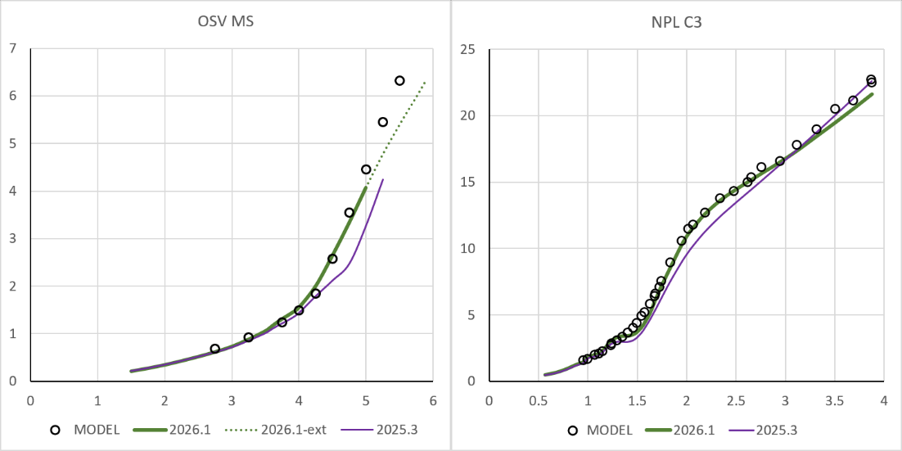
NavCad 2026 introduces significant improvements to its Analytical Distributed Volume Method (ADVM), providing naval architects and marine engineers with more accurate resistance predictions for displacement and semi-displacement vessels.
Available in the Premium Edition, the enhanced ADVM now incorporates advanced speed-dependent sinkage and trim corrections through a fully refined hydrostatic dataset.
The latest update improves the representation of wetted hull geometry as vessels move through the water, capturing critical effects such as transom immersion and newly wetted stern areas. These refinements result in more reliable resistance and performance predictions across a wide range of operating conditions.
NavCad 2026 also introduces new speed-range validation checks to help users identify calculations outside the method’s proven applicability limits, increasing confidence in design evaluations. Additionally, viscous drag prediction has been further optimized to enhance overall accuracy.
The upgraded ADVM methodology has been validated against model test data for multiple vessel types, including wide-beam offshore supply vessels and high-speed NPL-series hulls, demonstrating its effectiveness across diverse marine applications.
With NavCad 2026, naval architects gain greater precision, improved design confidence, and enhanced performance analysis capabilities for modern vessel development.
You have more power with NavCad 2026
NavCad supports hydrodynamic analysis and marine propulsion system simulation, helping
professionals evaluate vessel performance and propulsion options.
Discover the software and contact NDAR to discuss how it could support your naval architecture projects.
